By Moussa Benkhalifi, Driver-guide · Reviewed by Nizar Alami, Founder · Updated 2026-10-01
The Moroccan Sahara is one of those rare landscapes that lives up to every Instagram post you’ve ever seen – and then quietly exceeds it the moment you stand barefoot on a dune as the light turns from gold to rose. But choosing the right desert tours from marrakech can feel overwhelming. Two days? Three? Zagora or Merzouga? How long do you really sit in a car? We’ve broken down every popular route so you can pick the trip that matches your time, comfort and budget.
Quick answer: Quick answer
The best desert tours from Marrakech depend on your time and budget. A 2-day trip reaches Zagora’s rocky dunes and fits a tight schedule. A 3-day tour goes to Erg Chebi (Merzouga) for proper golden sand dunes and a spectacular sunrise. A 4-day trip adds deeper desert exploration or combines Merzouga with Erg Chigaga. For most travelers, the 3-day option offers the best balance of scenery, comfort and value.
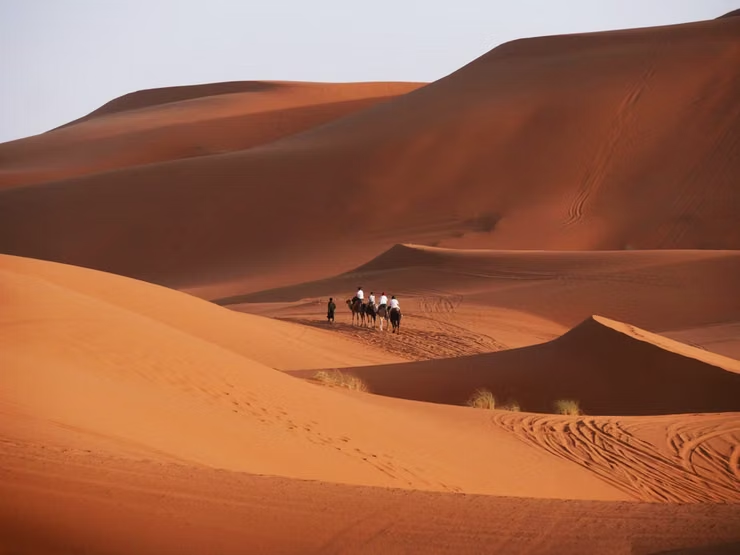
The best desert tour from Marrakech depends on your available time, budget, and the kind of Sahara experience you’re looking for. A 2-day trip to Zagora is ideal for a tight schedule, offering rocky desert landscapes and a taste of the Sahara. A 3-day tour to Merzouga takes you to the spectacular golden sand dunes of Erg Chebbi, with a desert camp stay and the chance to watch the sunrise over the dunes. A 4-day trip allows more time to explore the desert at a relaxed pace or combine Merzouga with the remote dunes of Erg Chigaga.
For most travelers, the 3-day Merzouga tour offers the best balance of scenery, time, and value, delivering the classic Sahara experience without requiring an extended itinerary.
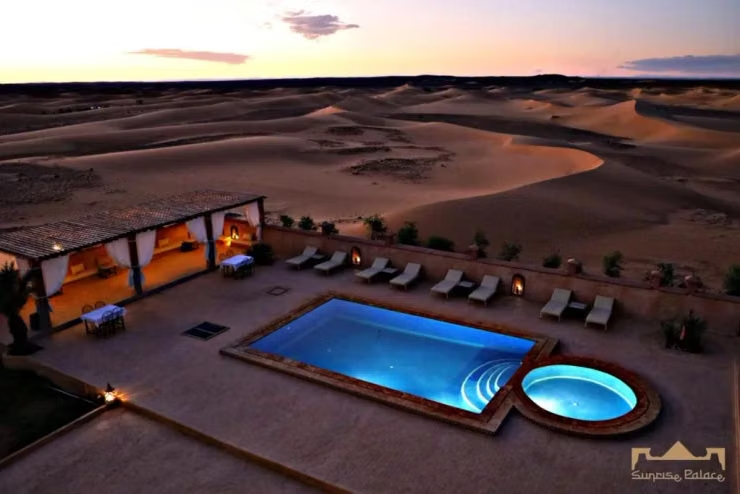
At a glance: 2 vs 3 vs 4 Days
| Tour length | Destination | Typical driving (each way) | Dune character | Key stops | Budget shared price* | Best for |
|---|---|---|---|---|---|---|
| 2 Days | Zagora | Source needed: ~7 hours Marrakech–Zagora | Smaller, rockier dunes | Aït Ben Haddou, Ouarzazate, Draa Valley | From ~$75/person | Travelers with very limited time |
| 3 Days | Merzouga (Erg Chebi) | Source needed: ~10 hours Marrakech–Merzouga | Tall golden sand dunes up to 150 m | Tizi n’Tichka, Aït Ben Haddou, Todra Gorge | From ~$91/person | First‑timers wanting the iconic Sahara image |
| 4 Days | Merzouga extended or Erg Chigaga | Same base + deeper desert driving | Merzouga’s high dunes or Chigaga’s wild remoteness | Adds Dadès Gorge, extra dune time | Private from ~$448/person; budget camel+quad from ~$200/person | Travelers who want more dune immersion or luxury |
*Prices are per person based on major booking platforms, 2026 data. They vary by group size and operator. Our own tours are listed further down.
Choosing the Right Desert Tour from Marrakech
Choosing the right desert tour from Marrakech comes down to three things: how much time you have, your budget, and the type of desert experience you want. While shorter trips are convenient for travelers on a tight schedule, longer itineraries offer more time to explore Morocco’s dramatic landscapes and experience the Sahara at a slower pace.
A 2-day Zagora tour is the most practical option if you have limited time. You’ll travel through the High Atlas Mountains, pass traditional Berber villages, and experience the desert atmosphere, although Zagora’s landscape is rockier and less dominated by vast sand dunes.
A 3-day Merzouga tour is the best choice for travelers dreaming of sweeping golden dunes, camel rides, and an overnight stay in a Sahara desert camp. The journey is longer, but the spectacular Erg Chebbi dunes make the extra travel time worthwhile.
If you have 4 days or more, you can explore the desert at a more relaxed pace, spend additional time around Merzouga, or venture toward the remote dunes of Erg Chigaga. These longer trips are ideal for travelers who want to go beyond the standard itinerary and discover more of southern Morocco.
Before booking, consider the total driving time, accommodation standards, group size, and activities included. The cheapest tour isn’t always the best value, especially when long hours on the road leave little time to enjoy the destination.
Our recommendation: Choose Zagora for a short getaway, Merzouga for the classic Sahara experience, and a 4-day itinerary if you want more flexibility and deeper exploration.
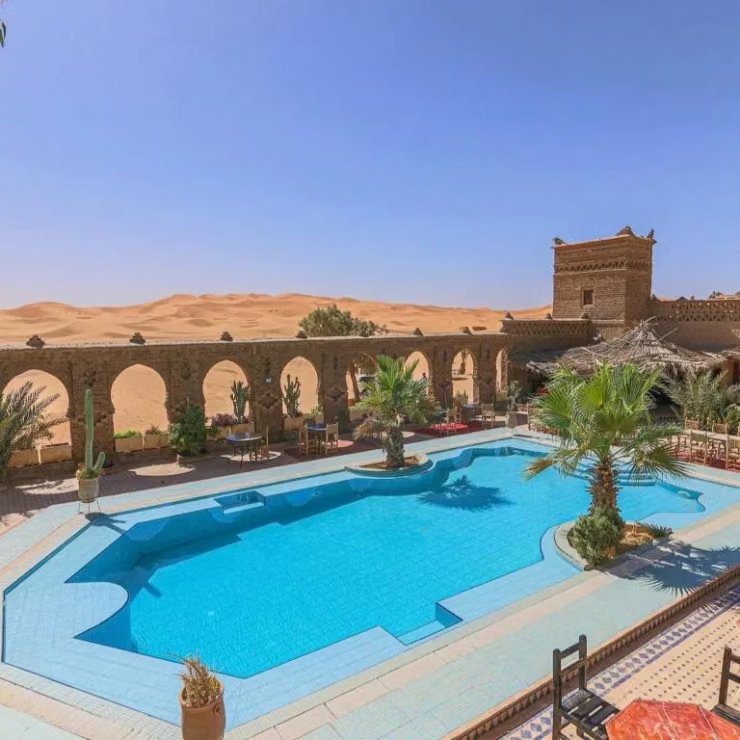
Why a desert trip is worth it
A desert trip from Marrakech is more than just an excursion—it’s an opportunity to discover a completely different side of Morocco. Beyond the busy souks and lively streets of the Red City, the landscape opens into dramatic mountain passes, ancient kasbahs, palm-filled valleys, and the vast, peaceful expanses of the Sahara.
One of the highlights is watching the sun set over the dunes as the sand changes from golden yellow to deep orange and red. A camel ride across the desert, an evening beneath the stars, and a night in a traditional Berber-inspired camp create an experience that feels worlds away from city life.
The journey itself is part of the adventure. Along the way, you’ll cross the High Atlas Mountains, pass through traditional villages, and discover the changing landscapes of southern Morocco. Depending on your itinerary, you may also visit historic kasbahs and lush oases that reveal the region’s rich cultural heritage.
The real reward is the contrast: the silence of the desert, the warmth of Moroccan hospitality, and the chance to experience landscapes and traditions you won’t find in Marrakech. Whether you choose a short Zagora trip or a longer journey to the towering dunes of Merzouga, a desert excursion can become one of the most memorable parts of your Moroccan adventure.
Yes – absolutely, and most travelers count it as a lifetime highlight. The ride through the High Atlas mountains, the first glimpse of the palm-fringed oasis, a camel trek into the silence of the erg, and a night under a sky so thick with stars it looks like salt on black velvet. That combination is hard to find anywhere else. The compromise is long driving hours, but with the right itinerary you trade time on the road for an experience unlike any other.
Quick overview: 2 vs 3 vs 4 days
Not sure how many days to spend in the Moroccan desert? Here’s a quick comparison to help you choose the right itinerary from Marrakech.
Duration Destination Best For Main Highlight
2 days Zagora Travelers short on time A quick desert getaway and overnight camp
3 days Merzouga (Erg Chebbi) First-time visitors Golden sand dunes, camel rides, and a Sahara sunrise
4 days Merzouga or Erg Chigaga Travelers wanting more time Deeper desert exploration and a more relaxed pace
Our recommendation: Choose the 2-day tour if time is limited, the 3-day Merzouga tour for the classic Sahara experience, or the 4-day option if you prefer a slower journey with more opportunities to explore.
Keep in mind that all three itineraries involve considerable driving from Marrakech. The extra day makes a real difference to how much time you can spend enjoying the desert rather than traveling to reach it.
- 2 days – only reaches Zagora’s desert fringes. It’s doable but rushed.
- 3 days – gives you the classic Merzouga experience with a sunset camel trek, overnight in a camp, and sunrise over the dunes. This is the sweet spot.
- 4 days – slows the pace, adds a second night in the desert or loops via Erg Chigaga, and often includes activities like quad biking.
Who each itinerary suits best
| Your situation | Best pick |
|---|---|
| You have exactly two free nights and just want a taste of the desert | 2-day Zagora |
| You want the real golden-dune Sahara and a proper desert camp, but don’t want to rush terribly | 3-day Merzouga |
| You prefer a relaxed rhythm, want to add quad biking or a luxury camp, or are keen to see both Merzouga and Erg Chigaga | 4-day private tour |
2-Day Desert Trip from Marrakech to Zagora
Not sure how many days to spend in the Moroccan desert? Here’s a quick comparison to help you choose the right itinerary from Marrakech.
Duration Destination Best For Main Highlight
2 days Zagora Travelers short on time A quick desert getaway and overnight camp
3 days Merzouga (Erg Chebbi) First-time visitors Golden sand dunes, camel rides, and a Sahara sunrise
4 days Merzouga or Erg Chigaga Travelers wanting more time Deeper desert exploration and a more relaxed pace
Our recommendation: Choose the 2-day tour if time is limited, the 3-day Merzouga tour for the classic Sahara experience, or the 4-day option if you prefer a slower journey with more opportunities to explore.
Keep in mind that all three itineraries involve considerable driving from Marrakech. The extra day makes a real difference to how much time you can spend enjoying the desert rather than traveling to reach it.
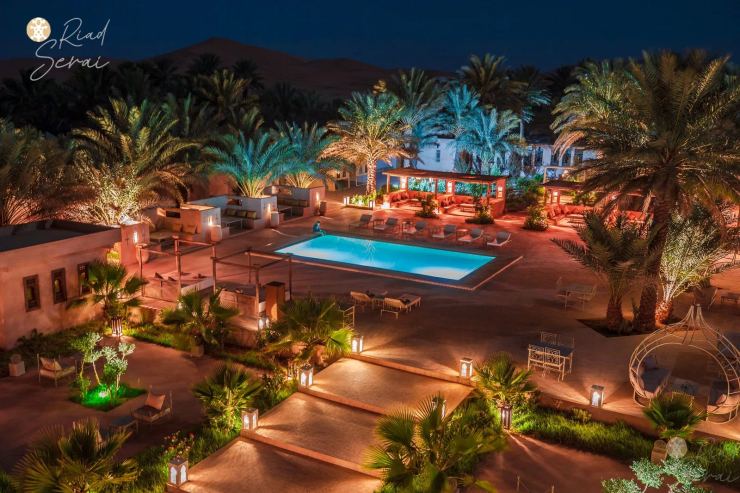
Itinerary day-by-day
Day 1 – Marrakech → Tizi n’Tichka Pass → Aït Ben Haddou (UNESCO stop) → Ouarzazate → Draa Valley → Zagora. Arrive in time for a sunset camel ride.
Day 2 – Sunrise over Zagora’s dunes, then the long drive back to Marrakech, arriving early evening.
It’s a corridor of scenery, but nearly 14 hours of driving packed into two days. You’ll get a sample, not the full Sahara.
What the Zagora dunes are really like
Zagora sits at the edge of a stony desert. The dunes are smaller and strewn with rocks – not the wind-sculpted golden waves you see on postcards. That said, the palms of the Draa Valley and the simple desert camps still make for a memorable escape. It’s the nearest sand-dune desert to Marrakech after the stone Agafay Desert, so for travelers with only two days it’s the only viable option.
Typical inclusions and exclusions
Most 2-day shared tours include: round‑trip transport, first‑night dinner and breakfast, camel ride, and basic tent or auberge accommodation. Lunch, drinks and guide gratuities are almost always extra. Check whether a hotel pickup from your riad is included – it usually is, but confirm.
Price range and value for money
Shared group trips start at approximately $75–$120 per person. At that price it’s an affordable adventure, but the value equation shifts quickly when you factor in the long drives and the modest dunes. If your schedule allows even one extra day, our 3-Day Sahara Desert Tour (Merzouga) gives you a much richer experience.
3-Day Desert Tour from Marrakech to Merzouga (Erg Chebi)
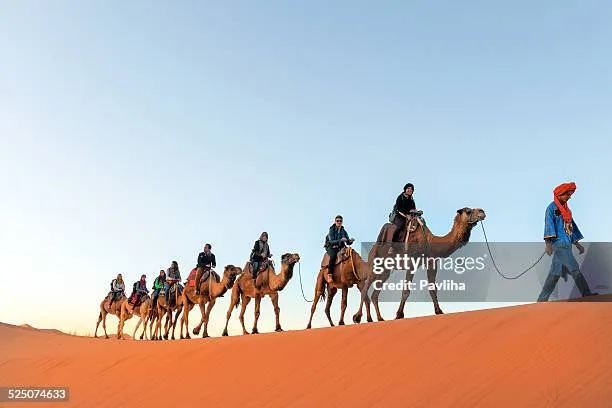
A 2-day desert trip from Marrakech to Zagora is ideal for travelers who want a taste of the Sahara without committing to a longer journey. It combines spectacular High Atlas Mountain scenery, traditional villages, palm groves, and an overnight desert camp into a short but rewarding adventure.
Day 1: Marrakech to Zagora
Leave Marrakech early and cross the High Atlas Mountains via the scenic Tizi n’Tichka Pass. Along the way, you can visit the historic Aït Ben Haddou Kasbah, a UNESCO World Heritage Site, before continuing through the landscapes of Ouarzazate and the Draa Valley, famous for its extensive palm groves and traditional kasbahs.
By late afternoon, you’ll reach the Zagora area, where you can enjoy a camel ride or transfer to your desert camp, depending on the tour package. Spend the evening watching the sunset, enjoying a traditional Moroccan dinner, and relaxing beneath the stars.
Day 2: Zagora to Marrakech
Wake up early to enjoy the desert sunrise before breakfast at camp. Afterward, begin the return journey to Marrakech, retracing your route through the Draa Valley and High Atlas Mountains. You’ll typically arrive in Marrakech in the evening, depending on traffic, stops, and road conditions.
Pros of the 2-day Zagora tour
Ideal for tight schedules: Experience southern Morocco in just two days.
Scenic mountain journey: Cross the High Atlas and discover the landscapes of the Draa Valley.
Overnight desert experience: Enjoy a camp stay, traditional food, and stargazing.
Budget-friendly option: Usually less expensive than longer desert itineraries.
Cons of the 2-day Zagora tour
Long driving hours: Much of the trip is spent traveling between Marrakech and Zagora.
Fewer towering sand dunes: Zagora is known more for its rocky desert terrain and smaller dunes than the expansive sandy landscapes of Merzouga.
Limited exploration time: The tight schedule leaves little room for extended stops or activities.
A fast-paced experience: You’ll spend more time on the road and less time relaxing in the desert.
Who should choose it? The 2-day Zagora trip is best for travelers with limited time who want to experience Morocco’s desert landscapes and spend a night at a desert camp. If your dream is to see vast, golden Sahara dunes, consider the 3-day Merzouga tour instead.
Classic itinerry: Marrakech to Merzouga and back (or on to Fes)
Most 3‑day tours follow this spine:
Day1 – Marrakech → High Atlas via Tizi n’Tichka (2,260 m) → Aït Ben Haddou → Ouarzazate → Dadès Valley. Overnight in a hotel/riad.
Day2 – Dadès Gorge → Todra Gorge (walk inside the 300‑m cliffs) → Erfoud → Merzouga dunes. Camel trek at sunset, night in a desert camp.
Day3 – Sunrise over the dunes, then return drive to Marrakech, or continue to Fes for an extra fee.
The Fes option is popular with travelers who want to join two imperial cities without looping back. Our Marrakech, Sahara & Fes — 6 Days expands this into a comfortable multi‑day journey.
Highights: Tizi n’Tichka, Todra Gorge, camel trek
The 10‑hour drive each way crosses the High Atlas mountains, passes the desert film studios of Ouarzazate, and cuts through the Todra Gorge – a dramatic canyon where you can walk the riverbed. The camel trek into the dunes is timed to catch the golden hour, and the silence of the erg at dusk stays with you long after the trip.
Kasbah Aït Ben Haddou is a UNESCO World Heritage Site and a stop on virtually all 3‑day tours. Its mud‑brick ksar has been used in films from Gladiator to Game of Thrones.
Sunset and sunrise in the dunes
This is the non‑negotiable peak of any Merzouga trip. Camels walk you about an hour into the sands. At sunset, the dunes glow orange‑pink; at sunrise, the shadows are crisp and the air cool. You’re back in camp for a breakfast that tastes different when you’ve just watched the Sahara wake up.
Accomodation: desert camps vs hotels
On the first night, tours stop in a simple hotel or riad near the Dadès Gorge. The second night is in a desert camp. Camps range from basic shared tents with a drop‑toilet to luxury camps with proper beds, private bathrooms and hot showers. Most tours include dinner and breakfast at the camp, and many let you upgrade to a luxury tent. If private facilities matter to you, confirm before booking.
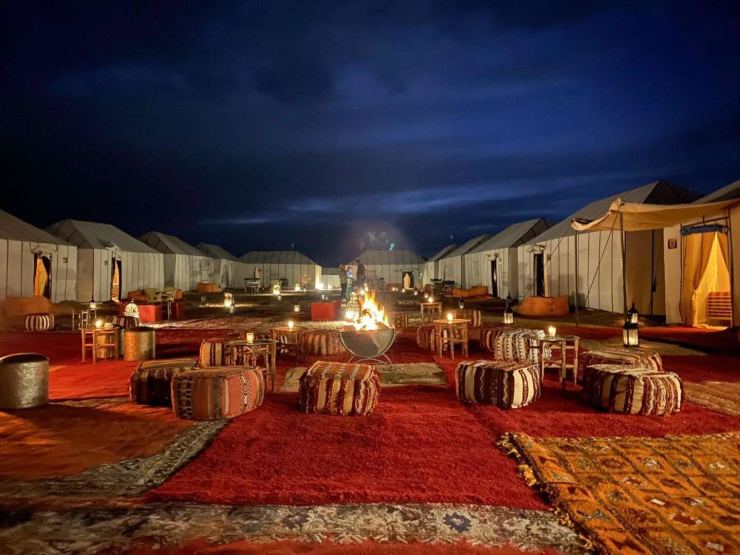
User-provided Google Business photo collection; selected for these drafts at owner request
What does a 3‑day tour cost? (shared, private, luxury)
What is usually included?
Included in many tours
Often costs extra
Transport from Marrakech
Lunches and drinks
One night in a hotel or guesthouse
Tips
One night in a desert camp
Optional quad biking
Breakfasts and selected dinners
Some entrance fees or local guides
Camel ride or camp transfer
Premium camp upgrades
Check the exact inclusions before booking, as packages differ.
From €190
+2
Which option offers the best value?
For most travelers, I'd recommend a shared tour with a luxury desert camp upgrade. You keep transport costs low while enjoying a more comfortable night among the Erg Chebbi dunes.
If you're traveling as a group of four or more, compare the total price of a private tour against four shared tickets—you may find the difference is smaller than expected.
- Shared group (basic camp): from ~$91–$133/person
- Shared group (higher comfort): from ~€98 ($105) to $262/person
- Luxury private tour: from ~$131/person on Viator
Our own 3-Day Sahara Desert Tour (M erzouga) starts at €399/person and runs as a private journey with hand‑picked camps and a driver‑guide who knows the region inside out.
4-Day Desert Tours from Marrakech: Extra Depth and Erg Chigaga
Erg Chigaga is ideal if you want a more remote desert experience, away from the larger concentration of camps around Merzouga. Reaching the dunes requires a 4×4 journey across desert tracks from the M’Hamid area, making this a more adventurous option.
Deep Sahara Tour
+1
Typical itinerary
Day 1 — Marrakech to the Draa Valley
Cross the High Atlas Mountains, visit Aït Ben Haddou, and continue toward Agdz for an overnight stay.
Day 2 — Draa Valley to Erg Chigaga
Travel through Zagora and M’Hamid before taking a 4×4 across desert terrain to the dunes. Enjoy sunset and dinner at camp.
Day 3 — Explore the Sahara
Spend a full day in the desert, with time for dune walks, optional sandboarding, and excursions toward the Iriki area, depending on your tour.
Day 4 — Return to Marrakech
Cross the desert tracks back toward the paved road and return through southern Morocco and the High Atlas.
Two main 4‑day routes: Merzouga extended or Erg Chigaga
A fourth day transforms the trip. The most common option adds a second night in Merzouga proper – you get a full morning in the dunes, maybe try quad biking, and don’t face a 10‑hour drive straight after sunrise. The alternative heads to Erg Chigaga, a wilder, more remote dune field near Mhamid. Chigaga sees far fewer travelers; its solitude feels profound.
Itinerary: More time in dunes, extra stops like Dadès Gorge
One of the biggest advantages of a 4-day desert tour from Marrakech is having more time to enjoy the Sahara without rushing between destinations. Instead of spending most of your trip on the road, you can explore the dramatic landscapes of southern Morocco, stop at spectacular viewpoints, and spend extra time among the golden dunes of Merzouga.
Day 1: Marrakech to the Dadès Valley
Cross the High Atlas Mountains via the Tizi n’Tichka Pass, stopping to admire the mountain scenery and visit the historic Aït Ben Haddou Kasbah. Continue through Ouarzazate and the Skoura palm oasis before reaching the Dadès Valley for the night.
Day 2: Dadès Gorge, Todra Gorge, and Merzouga
Spend the morning exploring the winding roads and dramatic rock formations of Dadès Gorge. Continue to Todra Gorge, where towering canyon walls rise above a narrow river valley. After lunch and a short walk, travel through the desert towns and palm groves toward Merzouga.
Arrive at Erg Chebbi in time for a camel ride or transfer to your desert camp, followed by sunset over the dunes and dinner beneath the stars.
Day 3: A Full Day Among the Sahara Dunes
With an additional day in the desert, you can enjoy the landscape at a much slower pace. Watch the sunrise over Erg Chebbi, walk across the dunes, try sandboarding, or arrange a 4×4 excursion around the region.
Depending on your interests and tour arrangements, you can also visit nearby villages, learn about local traditions, or simply relax at camp and enjoy the silence of the Sahara. Spending a second night near the dunes means you won't have to leave immediately after sunrise.
Day 4: Merzouga to Marrakech
After breakfast, begin the return journey to Marrakech. Travel back through southern Morocco, with stops depending on your route and schedule. Expect a long driving day, usually arriving in Marrakech in the evening.
Why choose this itinerary?
More time in the dunes: Enjoy a slower Sahara experience, with the possibility of a second desert night.
Spectacular canyon scenery: Explore both Dadès Gorge and Todra Gorge along the way.
Less rushing: Allow more time for walks, photography, and scenic stops.
A richer Moroccan experience: Combine mountains, kasbahs, valleys, canyons, and desert landscapes in one trip.
Best for: Travelers who want the iconic Erg Chebbi dunes but prefer a more immersive experience than the standard 3-day tour. Confirm the overnight locations when booking, as some 4-day itineraries still include only one night at a desert camp.
- Day1 – Marrakech → Aït Ben Haddou → Ouarzazate → Dadès Gorge.
- Day2 – Todra Gorge → Merzouga dunes, sunset camel trek.
- Day3 – Full morning at Erg Chebi (sandboarding, quad bike, 4×4 excursion) → second desert night.
- Day4 – Sunrise, then drive back to Marrakech or Fes.
The Chigaga variant bypasses Merzouga, heading south through the Draa Valley to Mhamid, where a 4×4 takes you into the dunes. You spend a remote night and return through the same corridor, often adding a stop at the Taznakht carpet cooperatives.
Price comparison: private tours from ~€448
Private 4‑day Merzouga tours start around $448/person on Viator. More budget‑oriented shared tours that add a quad bike can dip to ~$200/person. Our Luxury Desert Escape — 4 Days, priced from €1,890/person, raises the bar with premium camps, exclusive activities and refined comfort.
For families wanting a longer journey that blends desert, mountains and cities, our Family Morocco Adventure — 7 Days may be a better fit.
What to Expect on Any Desert Trip from Marrakech
Whether you choose a 2-day Zagora excursion, a 3-day Merzouga adventure, or a 4-day journey into the Sahara, a desert trip from Marrakech combines long scenic drives, cultural discoveries, and unforgettable desert landscapes. While each itinerary offers a different experience, there are a few things you can expect from almost any tour.
Long Drives Through Changing Landscapes
Getting to the desert is part of the adventure. Most itineraries cross the High Atlas Mountains via the Tizi n’Tichka Pass before continuing through traditional Berber villages, historic kasbahs, palm-filled valleys, and arid landscapes. Expect several hours of driving each day, with stops for sightseeing, meals, and photographs.
An Overnight Stay in the Desert
One of the highlights is spending a night at a desert camp. Depending on your package, accommodation can range from a simple traditional tent to a luxury camp with comfortable beds and a private bathroom. Most tours include dinner and breakfast, often accompanied by Moroccan mint tea and local music around the campfire.
Camel Rides, Sunsets, and Sunrise Views
Many tours include a camel ride or another transfer into the dunes, particularly around Merzouga's Erg Chebbi. Watching the sunset over the sand, followed by a night under the stars, is often a memorable part of the experience. An early start the next morning gives you the chance to see the dunes illuminated by the first light of day.
Moroccan Food and Local Culture
Along the route, you'll have opportunities to sample Moroccan dishes such as tagine, couscous, and freshly baked bread. Depending on the itinerary, you may visit historic kasbahs, mountain villages, local markets, or communities in the desert region. The specific stops vary by operator, so check your itinerary if cultural visits are a priority.
Shared Transport or a Private Experience
Shared tours generally use a minibus with other travelers and follow a fixed schedule, making them a budget-friendly choice. Private tours offer greater flexibility for stops, photography, and sightseeing. Accommodation also varies, so confirm whether your package includes a standard or luxury desert camp.
What to Pack
For a more comfortable trip, bring:
Comfortable walking shoes and lightweight clothing.
A warm layer for cool desert evenings and early mornings.
Sunglasses, sunscreen, and a hat.
A small day bag, reusable water bottle, and personal toiletries.
A camera or phone for the landscapes and sunrise.
A Few Things to Know Before Booking
Travel time is substantial: The Sahara is far from Marrakech, and return journeys can be long.
Temperatures vary: Days can be hot, while nights can be surprisingly cold, particularly in winter.
Not every desert looks the same: Zagora has a rockier landscape, while Merzouga is famous for its sweeping golden dunes.
Inclusions differ: Check meals, entrance fees, camp facilities, luggage limits, and optional activities before paying.
Comfort depends on the package: A luxury camp can offer significantly different facilities from a basic desert camp.
Ultimately, a desert trip is about more than reaching the dunes. It's the combination of Morocco's changing landscapes, mountain roads, local hospitality, and the quiet beauty of the desert that makes the journey special. Choosing the right duration and accommodation will help you enjoy the experience at a pace that suits you.
Driving times and road conditions
the driving time from Marrakech to Zagora is commonly estimated at around 6 to 7 hours. A source that explicitly supports the ~7‑hour figure is a 2026 travel guide for the Draa Valley, which states that the Marrakech–Zagora route totals about 360 km and about 7 hours.
This aligns with other travel resources, which generally cite 6–7 hours for the drive without long stops, or 7–9 hours when factoring in breaks and the winding Tizi n’Tichka pass. The variation reflects different driving styles and how often travelers stop for photos, lunch, or rest.
Typical inclusions: transport, guide, meals, accomodation
Booking a desert tour from Marrakech can feel like a maze of options. Prices vary, itineraries differ, and it's not always clear what you're actually paying for. To help you plan, here’s a clear breakdown of the standard inclusions and exclusions you can expect on most multi-day tours to the Sahara, particularly the popular 3- and 4-day routes to Merzouga.
The Standard Inclusions
Most reputable tour operators structure their packages around a core set of services. These are the elements you should expect to see listed under "What's Included" when you book.
Transport and Your Driver-Guide
The backbone of any desert tour is the transport. Almost all tours include pickup and drop-off from your riad or hotel in Marrakech. You'll travel in an air-conditioned vehicle, which is essential for comfort during the long drives across the Atlas Mountains and beyond.
Your driver is more than just a driver; they typically act as a driver-guide, providing commentary along the way and handling the logistics of the trip. Many tours also offer onboard Wi-Fi, though this can be inconsistent in remote areas.
Accommodation and the Desert Camp Experience
For 3- and 4-day tours, your accommodation is almost always included. This usually consists of:
One night in a hotel or guesthouse along the route (often in the Dades Valley or near Tinghir).
One night in a desert camp in the Erg Chebbi dunes near Merzouga.
The standard of these accommodations can vary significantly based on the price of your tour, ranging from basic tents with shared facilities to luxury camps with private bathrooms and proper beds.
Camel Trekking and Meals at Camp
The signature experience of any Sahara tour is the camel trek. Camel trekking at sunset and sunrise is standard on 3- and 4-day tours. You'll typically ride a camel into the dunes to reach your camp for the night, and then back out the next morning. Sandboarding is also frequently offered as a free activity at the camp.
Regarding meals, the desert camp meal plan (dinner and breakfast) is almost always included. This covers the meals you eat where you sleep. Some tours may also include a Berber drumming and music experience around the campfire.
What’s Usually Not Included
Just as important as knowing what you get is knowing what you'll need to pay for separately. These are the common exclusions.
Lunches and Drinks
While breakfast and dinner are covered at your accommodation, lunch is typically not included. This is often by design, giving you the freedom to stop at local restaurants along the drive where you can choose your own food. Drinks, including bottled water, are also usually excluded, so it's wise to carry cash for these purchases.
Desert camp experiences: shared vs private tents, toilets, showers
Camps vary wildly. On a budget shared tour, you might sleep in a woolen tent with a mattress on the floor and share a simple toilet block outside. Luxury camps provide a full bed, electricity, private en‑suite bathroom with hot water, and sometimes a veranda to watch the stars. If a private bathroom matters to you, don’t assume – ask.
Safety, health and comfort in the Sahara
Desert tours are generally safe, but you’re in a remote area. Carry any necessary medications, a basic first‑aid kit, and plenty of water. Sandstorms can blow up suddenly – a scarf to cover your face is essential. Temperatures swing sharply; even in spring daytime can reach 35 °C while nights drop to single digits. Wear loose, lightweght layers and closed shoes for the camel ride.
How to Choose the Right Tour Company
The most reliable indicator of a good operator is a willingness to put everything in writing. A well-run company will happily confirm the maximum passenger count, pickup time, camp location, and every inclusion before you transfer a deposit. If a company dodges any of these questions, that is your answer.
Treat price as the last filter, not the first. The cheapest headline figure almost always hides a large shared coach, a long lunch stop where you pay for your own food, and a camp far from the best dunes.
Price Reality Check
Knowing the fair market rate helps you spot bait pricing. Here are typical ranges for a 3-day Marrakech–Merzouga tour:
Tour Type Typical Price (per person) Notes
Shared group €80–150 8–16 passengers, fixed itinerary, standard camp
Budget shared €180–250 Basic camps, rushed stops — proceed with caution
Private (for 2) €250–450 Total cost €500–900, flexible pace, private camp accommodation
Prices below €150 per person for a 3-day shared tour should raise immediate questions. A fair shared tour includes transport, accommodation, and basic meals. When the price looks too good, the difference reappears as surprise fees in the dunes—where you have zero leverage
Shared vs private tours
Shared tours keep the price low, but you travel in a group of up to 17. Stops are fixed, and comfort is standardized. Private tours let you set the pace, choose your own camp, and add stops. For a couple or family, a private tour often feels like a different trip entirely.
Checking reviews and inclusions carefully
Pay more attention to recent reviews, especially those mentioning vehicle condition, guide knowledge, and actual camp quality. Ask directly what’s included – the lowest price often hides mandatory “local guide” fees or saddle charges. A transparent operator will list exactly what you pay and what you bring.
Why book directly with local operators
When you book via a large aggregator, a chunk of your money goes to the platform, not the people running your tour. Direct‑booked local operators, like RedCity Rides, can reinvest in better guides, vehicles and camps – and you know exactly who you’ll meet. Our founder, Nizar Alami, personally vets every itinerary and driver so there are no surprises.
Best seasons for desert tours (spring, autum)
March to May and September to November offer the most pleasant desert weather – warm days, cool nights, and fewer tourists than Christmas or Easter. Summer (June–August) can be dangerously hot in the erg, with daytime highs above 45 °C. Winter nights (December–February) can drop close to freezing; camps often provide thick blankets, but pack accordingly.
What to bring: clothing, sun protecton, camera
| Category | Essentials |
|---|---|
| Clothing | Lightweight long sleeves, warm layer for night, scarf or shemagh, comfortable walking shoes |
| Sun | Sunscreen SP50+, sunglasses, lip balm |
| Sleep & camp | Headlamp (essential), earplugs |
| Tech | Power bank (camps may have limited charging), camera with dust protecton |
| Health | Hand sanitizer, motion‑sick pills, any personal medication |
Temperatue extremes and managing expectations
Even in late spring, a sudden sandstorm can chill the air. The desert teaches you to be adaptable. Trust your guide; the best ones will read conditions and adjust stops so you stay safe and comfortable.
That advice is worth taking literally when you pack. Bring layers: a windproof shell, a scarf or buff for your face, sunglasses, and a warm fleece for camp nights. A sandstorm doesn’t have to ruin the trip—it just changes the plan. A good driver-guide will know when to wait out a gust, reroute around a closed pass, or swap a viewpoint for a tea stop in a nearby village.
This is another reason private tours can be worth the premium: flexibility is built into the itinerary. On a fixed shared schedule, the bus often can’t bend. Before you book, ask your operator how they handle bad weather—and listen for whether the answer sounds like a policy or a promise.
In the end, the desert rewards travelers who prepare for the unexpected and choose a guide who knows when to stick to the plan and when to let it go.
Local tip from Moussa
{LOCAL TIP FROM AUTHO R}
⚠️ Note: Pack an extra scarf or shemagh – not just for the photos, but to cover your mouth and nose when the wind picks up. And a small headlamp is worth its weight in gold when you’re trying to find the bathroom in camp after dark.
Travel it with us
The Sahara isn’t a checklist. It’s a rhythm—long drives, sudden weather, tea poured from a height, stars that feel close enough to touch. The right guide makes the difference between simply seeing the dunes and truly understanding them.
We run small-group and private Marrakech–Merzouga tours with licensed driver-guides, comfortable air-conditioned vehicles, and desert camps we’ve checked ourselves. We build in flexibility for sandstorms, slow mornings, and the photo stop you didn’t plan for. And we tell you exactly what’s included—and what isn’t—before you book.
If you want the desert done properly, travel it with us.
- 3-Day Sahara Desert Tour (M erzouga) — 3 Days / 2 Nights · from €399/person
- Luxury Desert Escape — 4 Days — 4 Days /3 Nights · from €1,890/person
- Marrakech, Sahara & Fes — 6 Days — 6 Days /5 Nights · from €840/person
- Family Morocco Adventure — 7 Days — 7 Days /6 Nights · from €949/person
FAQ
What is the best desert tour to take from Marakech?
For most first‑timers, the 3‑day trip to Merzouga strikes the ideal balance between travel time and Sahara payoff. If you only have 2 days, Zagora gives a taste but expect smaller dunes and long drives. For luxury or more immersion, the4‑day private tour to Merzouga or Erg Chigaga is superior.
What is the closest desert to Marrakech?
The Agafay Stone Desert, about 40 minutes outside Marrakech, has rocky desert scenery but no sand dunes. For proper sand dunes, Zagora is the closest at roughly Source needed: distance Marrakech–Zagora km (around 7 hours drive). Merzouga (Erg Chebi), the nearest large‑dune field, is about Source needed: distance Marrakech–Merzouga km and takes around 10 hours to reach.
How much does a3‑day desert tour from Marrakech to Fes cost?
Shared group tours start at about $100–$150/person. Private tours run between $250 and $350/person depending on camp quality. Luxury upgrades can push prices above $500. Our Marrakech, Sahara & Fes — 6 Days combines the route with cultural stays from €840.
Is a desert tour worth it in Morocco?
Absolutely – the Sahara is one of the world’s iconic landscapes. Sunset camel trekking, a night in a Berber camp under a sky full of stars, and sunrise over the dunes combine into a memory most travelers rank among their life’s best experiences. The long drives are the trade‑off.
Which tour company is best for Morocco?
There’s no single “best” – it depends on your style (shared/private, budget/luxury). Look for locally‑owned operators with transparent inclusions, licensed guides, and recent reviews. RedCity Rides offers vetted itineraries and direct booking so you skip aggregator markups.
Which desert in Morocco is considered the best?
Erg Chebi (M erzouga) is the most famous, with golden sand dunes reaching 150 metres. Erg Chigaga is more remote and wild, ideal for solitude. Zagora’s dunes are smaller but still stir the imagination; it’s the practical choice for a very short trip.
Sources
- Viator – 2‑Day Shared Desert Tour from Marrakech to Zagora
- Viator – 3‑Day Desert Tour from Marrakech to Merzouga
- Viator – 4‑Day Private Desert Tour from Marrakech to Merzouga
- GetYourGuide – 4‑Day Sahara Desert Tour with Camel and Quad Bike
- GetYourGuide – 3‑Day Shared Desert Tour from Marrakech to Merzouga
- Viator – 3‑Day Luxury Desert Tour to Fes from Marrakech
- Viator – Kasbah Aït Ben Haddou and typical inclusions
- Viator – Driving time from Marrakech to Merzouga