By Rachide Ouazzani, Senior guide (medina & culture) · Reviewed by Nizar Alami, Founder · Updated 2026-09-23
This 6-day northern Morocco itinerary connects four distinct corners of the north: Tangier’s Atlantic-Mediterranean edge, Asilah’s whitewashed art lanes, Chefchaouen’s blue mountain medina, and Fes’ medieval quarter. It is a compact loop for travellers who want the cultural depth of the north without rushing through the whole country. If you are deciding between the north and the classic Marrakech–Sahara route, read our North Morocco travel guide first, then use this day-by-day plan to build your trip.
Quick answer: Quick answer This 6-day northern Morocco itinerary takes you from Tangier's coastal sights to the blue-washed streets of Chefchaouen and the medieval medina of Fes, with a stop in the artsy town of Asilah. It is ideal for travellers wanting a compact yet immersive experience of Morocco's north.
| Day | Route | Main experience |
|---|---|---|
| 1 | Arrive in Tangier | Medina, kasbah, Cap Spartel sunset |
| 2 | Tangier → Asilah | Ramparts, murals, beach |
| 3 | Asilah → Chefchaouen | Blue medina first stroll |
| 4 | Chefchaouen | Kasbah Museum, Rif foothill hike |
| 5 | Chefchaouen → Fes | Fes el-Bali evening walk |
| 6 | Fes and departure | Bou Inania Medersa, tanneries, souks |
Northern Morocco often gets overshadowed by the more famous Marrakech–Sahara corridor, but it rewards travellers with a slower, greener, and more Mediterranean flavour. The region blends Andalusian influences, Atlantic winds, and Rif Mountain calm. This loop is deliberately short enough to fit into a week of annual leave, yet rich enough to feel like a real journey. You will move by train, bus, or private transfer, staying in riads inside ancient medinas, and eating seafood by the coast and mountain tagines in the hills.
The route works in either direction. If you arrive in Fes instead of Tangier, simply reverse the days. The transport links are frequent, and each stop is compact enough that you won’t spend most of your trip sitting in a vehicle. Below you’ll find a detailed day-by-day breakdown, practical advice, food tips, and answers to common questions.
Day 1: Arrival in Tangier
Day 1: Arrival in Tangier
Your Moroccan adventure begins in Tangier, a captivating port city where the Mediterranean meets the Atlantic and Europe feels remarkably close. With its whitewashed buildings, lively cafés and layered history, Tangier is an atmospheric introduction to Morocco.
After arriving, settle into your accommodation and take some time to get your bearings. If your schedule allows, head towards the medina, where narrow streets lead to traditional shops, small cafés and historic houses. Wander at an easy pace and let your first impressions of Morocco unfold naturally.
Make your way to the Kasbah, the old fortified quarter overlooking the Strait of Gibraltar. Its winding lanes and elevated viewpoints offer some of the city's most memorable panoramas. From here, you can often see the meeting point of the Mediterranean and Atlantic and, on a clear day, the coast of Spain.
As evening approaches, enjoy a relaxed dinner featuring Moroccan classics such as tagine, couscous or freshly grilled seafood. Tangier's coastal setting makes seafood a particularly appealing choice.
Don't try to see everything on your first day. The best way to begin a journey through Morocco is to slow down, absorb the atmosphere and allow yourself to adjust to the rhythm of the city.
Overnight: Tangier
Suggested pace: Easy, with time to rest after your journey
Highlights: Medina · Kasbah · Strait of Gibraltar · Moroccan cuisine
Getting to Tangier
Tangier is the natural gateway to this route. Tangier Ibn Battuta International Airport is located 15 km southwest of the city centre, and a taxi into town costs approximately Dh200 (US$22) each way, according to Lonely Planet. If you arrive by ferry, check which port your ticket uses: Tangier Ville is the central city port and handles cruise ships and high-speed ferries to Tarifa, while Tanger Med lies 45 km east and is one of Africa’s busiest ports.
Once you’re in the city, the easiest way to get to the medina is by petit taxi. Fares around town are metered, but some drivers may try to negotiate a flat rate, so agree before you get in or insist on the meter. If your riad is inside the medina, you’ll likely be dropped at a gate and walk the last few minutes; pack light and leave the wheeled suitcase at home if you can.
Exploring Tangier's Medina and Kasbah
After settling into your accommodation, go straight to the medina. Unlike a museum, it is a living neighbourhood, so there are no formal opening hours. Walk through the covered lanes, pause in a café, and then climb uphill into the kasbah for fresh air and views over the Strait of Gibraltar. The lane-level pace is part of the experience: stalls, doorways and small squares unfold slowly.
Tangier’s medina is compact but layered. Petit Socco and Grand Socco are the two main squares; Petit Socco was once a hangout for writers and spies, while Grand Socco is where the old city meets the new. From Grand Socco, you can walk up through the Mendoubia Gardens to the kasbah. The kasbah itself is a fortified quarter with quiet alleys, white-and-blue houses, and the former sultan’s palace, now the Kasbah Museum. The museum’s collection is modest, but the courtyard and views from the terrace are worth the entry fee if you have time.
Sunset at Cap Spartel
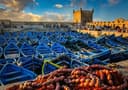
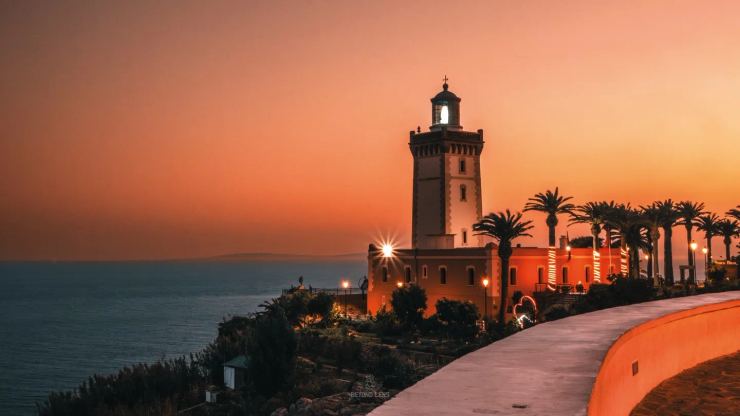
In the evening, take a taxi west to Cap Spartel, the most north-western point of Africa and the place where the Atlantic Ocean meets the Mediterranean Sea. The cape is 14 km from Tangier city centre, according to Lonely Planet. If you have extra time, continue to the Caves of Hercules, located approximately 5 km from Cap Spartel and about 16 km outside Tangier. Arrange a return taxi before you set out; the area is quieter after sunset.
Sunset at Cap Spartel is a ritual for locals and visitors alike. The lighthouse stands on a pine-covered cliff, and the light fades over the Atlantic as the two seas mingle below. It’s often windy, so bring a light jacket even in summer. The drive back to the medina takes about 25 minutes; have your driver wait or pre-arrange a pickup time.
Day 2: Tangier to Asilah
Morning in Tangier
Use the morning for a final walk through Tangier before moving south. The medina is often quieter early in the day, which makes it a good time to photograph doorways and browse the food stalls without the full midday crowd. Have breakfast near your riad, then check out and make your way to the station.
If you didn’t visit it the day before, the American Legation Museum is a worthwhile half-hour stop. It’s the only US National Historic Landmark on foreign soil and sits in the medina’s southern quarter. The building itself is a beautifully restored 18th-century riad, and the collection covers Tangier’s international past. Entrance is modest and it’s rarely crowded.
Travel to Asilah
Asilah is the first town south of Tangier and the first stop on the train line from Tangier, according to Rough Guides. It is a short hop by rail, which makes it an easy addition to a northern route. Buy your ticket at the station and keep your passport handy for travel.
The train journey takes about 40 minutes. Trains run regularly through the day, but not always on a fixed clock, so check the schedule the night before or ask at your riad. The station in Tangier is on the edge of the city centre, a short taxi ride from the medina. Seats are comfortable, and second class is perfectly fine even with luggage, though first class guarantees you a seat and air-conditioning.
Afternoon in Asilah
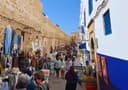
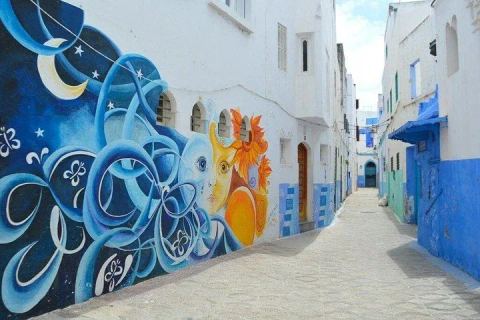
Asilah is a fortified seaside town on the northwest coast of Morocco, known for whitewashed walls, colourful murals and a relaxed atmosphere, as Rough Guides describes. Check into a riad inside the walls, then walk the ramparts, browse the art-covered lanes, and finish with a walk on the beach. If your dates line up with August, the Asilah International Cultural Festival lasts 3–4 weeks and brings art, dance, film, music and poetry to the town, according to Rough Guides.
Asilah’s ramparts were built by the Portuguese in the 15th century, and they still encircle the old town. The sea side of the walls drops straight to the Atlantic, and at low tide you can walk along the rocks below. Inside, the streets are almost blindingly white, with blue and green shutters and murals that change every year during the festival. There’s no single must-see monument; the town itself is the attraction. Spend the late afternoon doing nothing more than strolling and sitting with a mint tea.
Festival: Asilah International Cultural Festival — 3–4 weeks in August. Confirm exact dates before booking.
For dinner, head to the small restaurants near the fishing port or inside the medina. Grilled sardines, fried calamari, and seafood tagine are staples. Prices are reasonable, and many places have rooftop terraces with sea breezes.
Day 3: Asilah to Chefchaouen
Morning in Asilah
Have a slow breakfast inside the medina and take one last walk along the sea wall before checking out. Because the town is compact, you do not need to rush the ramp or the murals; you can revisit a favourite corner on the way to the station.
If you have a full morning, consider walking to Paradise Beach, a long stretch of sand about 3 km south of town. It’s reachable by taxi (about 10 minutes) or a long walk along the coast, and the water is calmer than in town. Many riads can help arrange a taxi or a shared ride.
Journey to Chefchaouen
This is the only backtracking day of the itinerary. First, take the train back to Tangier. From Tangier, the bus ride to Chefchaouen covers 112 km and takes approximately 2 hours 30 minutes, according to CTM. Chefchaouen does not have a train station, so you will arrive by road whether you choose CTM, another bus, or a private transfer, as Morocco Museum notes.
Depending on train and bus schedules, you may have a layover in Tangier of an hour or two. The bus station in Tangier is a short walk from the train station, and there are cafés nearby. CTM buses are modern, air-conditioned, and generally depart on time; other companies may be cheaper but less predictable. Tickets can be bought at the station or online in advance, which is wise in summer.
The drive climbs into the Rif Mountains, winding through green valleys and small villages. The final approach to Chefchaouen is especially beautiful, with the blue medina appearing against the mountainside.
First impressions of the Blue City
Chefchaouen sits in the Rif Mountains and is known as the Blue City for its blue-painted buildings, according to Rough Guides. It was founded in 1471, when Moorish and Jewish people fled the Reconquista of Spain, according to Booking.com. After checking in, take an evening wander through the blue lanes. The light softens late in the day, and the main staircases are easier to enjoy after day-trippers leave.
Chefchaouen is small and safe, but its steep streets and many steps can be tiring. Most riads are inside the medina or just at its edge. If you have heavy luggage, book a place on a street accessible by taxi or arrange a porter. The main square, Plaza Uta el-Hammam, is the beating heart of the medina, with restaurants, cafés, and the kasbah on one side. Even on a first stroll, you’ll notice how the blue changes with the light—from pale sky to deep indigo.
Day 4: Exploring Chefchaouen
Wandering the Blue Medina
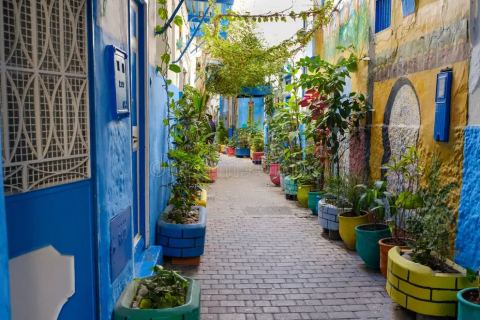
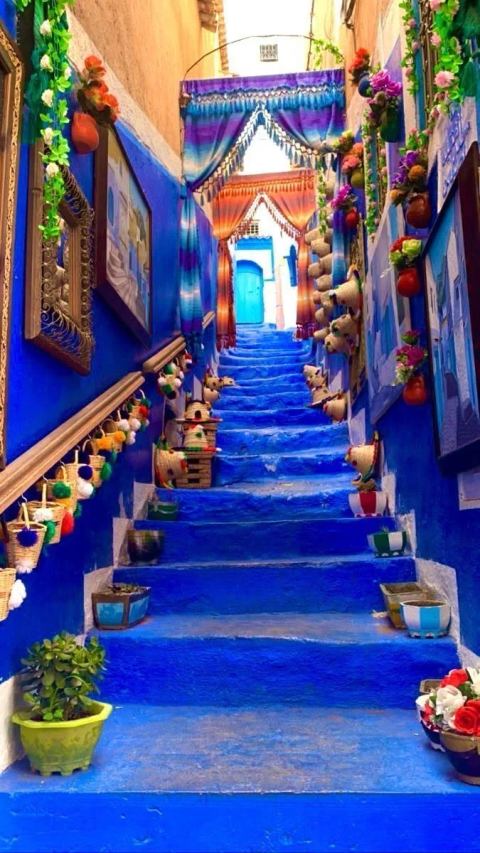
Start early, because the medina is small and the morning light is best before the sun climbs high. Walk the main staircases slowly, then dip into side alleys to see the smaller details: blue walls, terracotta pots, cats asleep in doorways. Chefchaouen rewards slow wandering more than a checklist.
As you walk, notice the different shades of blue—some say it symbolises the sky or heaven, others that it keeps mosquitoes away, while many locals simply say it keeps the town cool and calm. The true origin is debated, but the effect is undeniable. Keep your camera ready, but also take moments without it; the medina is very photogenic, yet the real pleasure is just being there.
For the best photographs without crowds, head to the Callejon El Asri, a narrow staircase lined with flowerpots and blue walls, or the street leading up from Ras El Ma. These spots get busy by mid-morning, so go early or late.
Kasbah Museum and Uta el-Hammam
The old medina includes several landmarks: the Kasbah Museum, Plaza Uta el-Hammam and the Grand Mosque, according to Booking.com. The kasbah sits at the edge of the main square. Check the current opening time at the entrance before buying a ticket, and keep small change ready for any entrance fee.
The kasbah is a small 15th-century fortress with a garden, a tower, and a modest ethnographic museum. The museum’s collection includes local textiles, pottery, and old photographs of Chefchaouen. The real highlight is climbing the tower for a view over the medina’s blue rooftops and the surrounding mountains. The Grand Mosque, on the square, is not open to non-Muslims, but its octagonal minaret is a useful landmark.
Hiking in the Rif Mountains
For a panoramic view of the blue medina, climb to the Spanish Mosque on the hill east of town. The uphill walk is straightforward, but take water and avoid the middle of the day in summer. For a longer walk, continue into the nearby Rif foothills with a local guide or a reliable GPS track, and return well before sunset.
The Spanish Mosque was built in the 1920s but never used for prayer; today it’s a simple white structure on a hilltop. The 20–30 minute walk starts near Ras El Ma and follows a dirt path. Go about an hour before sunset for the best light—the medina glows below as the mountains turn pink. For a more ambitious hike, the Cascades d’Akchour are a popular day trip, but they lie about 30 km from town and require a taxi or grand taxi ride, plus several hours of walking. Ask your riad for a recommended driver if you wish to go.
Day 5: Chefchaouen to Fes
Day 5: Chefchaouen to Fes
Leave the blue-washed streets of Chefchaouen behind and continue south towards Fes, one of Morocco’s most historic and culturally significant cities. The journey takes you from the peaceful mountain setting of the Rif into the fertile landscapes of northern Morocco.
If time allows, enjoy one last morning in Chefchaouen. Take a quiet walk through the medina, revisit the blue-painted lanes and stop for a coffee or mint tea before departing. An early start is recommended so you can make the most of your afternoon in Fes.
As the road winds away from the Rif Mountains, the scenery gradually changes. Green hills and rural farmland replace the dramatic mountain landscape, offering a glimpse of a quieter, more agricultural side of Morocco.
On arrival in Fes, check into your accommodation before beginning a gentle introduction to the city. Depending on your arrival time, explore the area around the historic medina or simply relax and prepare for a fuller exploration the following day.
For your first evening, enjoy dinner at a traditional Moroccan restaurant or riad. The flavours of Fes are particularly rich, with dishes influenced by centuries of Andalusian, Arab and Amazigh traditions.
Fes deserves time to be explored slowly. Save the maze of Fes el-Bali, its souks, historic madrasas and artisan workshops for tomorrow, when you can discover the medina at a more leisurely pace.
Overnight: Fes
Suggeste
Morning in Chefchaouen
Morning in Chefchaouen
Start your morning slowly in Chefchaouen, when the famous blue-painted streets are at their most peaceful. Before the medina fills with visitors, wander through its winding lanes and admire the different shades of blue covering walls, doorways and staircases.
Make your way towards the Kasbah, where you can explore its historic gardens and enjoy views across the old town. Afterwards, pause at a small café in Plaza Uta el-Hammam for a traditional Moroccan breakfast or a glass of mint tea while watching the city wake up.
The cooler morning air is ideal for exploring on foot, so take your time discovering artisan shops and tucked-away corners of the medina. Chefchaouen is a place to wander rather than rush, and the soft morning light brings out the character of its distinctive architecture.
Before departing for Fes, enjoy one last view over the blue rooftops and surrounding Rif Mountains. It is a peaceful farewell to one of Morocco’s most photogenic towns.
Suggested time: 8:00 AM–11:30 AM
Highlights: Blue medina · Kasbah · Plaza Uta el-Hammam · Rif Mountain views · Moroccan breakfast
Take a final pass through the medina before the midday transfer. This is a good moment to buy any small crafts you noticed the day before and to have one last mint tea on Plaza Uta el-Hammam. Pack before breakfast if you want the morning fully free.
Chefchaouen is known for wool blankets, woven rugs, and local goat cheese. The shops around the main square sell everything from leather poufs to ceramics. Bargaining is expected, but keep it friendly: a starting offer of half the asking price is common, and you’ll likely settle around two-thirds. If you’re not sure about quality, buy from a cooperative shop rather than a street stall.
Travel to Fes
The road distance from Chefchaouen to Fes is 194 km, according to Morocco Museum. There is no train option from Chefchaouen, so the choices are a bus, a shared grand taxi, or a private transfer. If you leave around midday, expect to reach Fes in the late afternoon.
CTM runs at least one daily bus from Chefchaouen to Fes, usually departing in the early morning or early afternoon. The journey takes 4–5 hours depending on stops and road conditions. Shared grand taxis leave when full from near the bus station; they are faster but less comfortable, and you may have to wait. A private transfer costs more but lets you stop for photos and lunch along the way. Your riad can arrange one.
The road passes through the Rif foothills and then flattens into rolling farmland as you approach Fes. The scenery is green in spring and golden in late summer.
Arrival in Fes
Fes is best experienced from inside the old city, so book a riad in Fes el-Bali. In the evening, step into the old city for a first orientation walk: follow the movement of shoppers and mule carts, use the minarets as landmarks, and finish with dinner on a rooftop overlooking the medina.
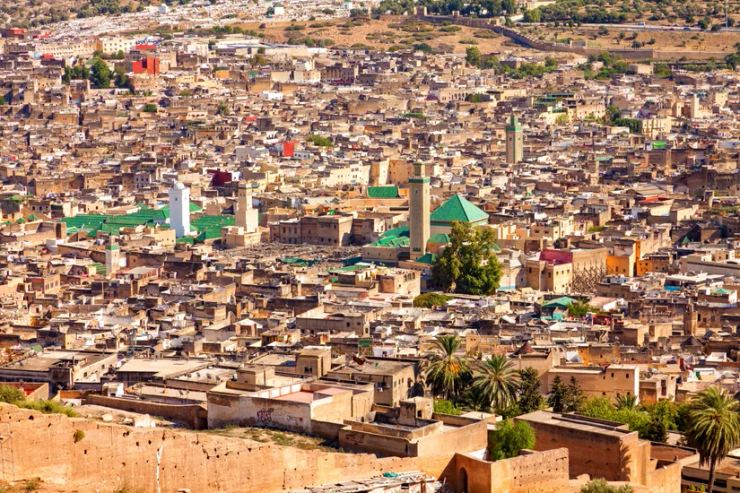
Fes el-Bali is one of the largest car-free urban areas in the world. It’s intense, loud, and utterly absorbing. The main street, Talaa Kebira, runs from Bab Bou Jeloud (the Blue Gate) to the heart of the medina. Lined with shops and food stalls, it’s a good introduction, but don’t be afraid to turn down a side alley—that’s where the medina’s real life happens. For dinner, many riads offer excellent multi-course meals; if you prefer to eat out, find a rooftop terrace near the gate.
Day 6: Fes and Departure
Exploring Fes el-Bali
Spend the morning inside Fes el-Bali, the old medina. Wander the narrow souq streets, follow the flow of shoppers and porters, and allow yourself to get briefly lost. If you need to reorient, ask for the nearest gate or the main market street. The medina is dense, so keep your phone tucked away and your daypack closed.
Fes el-Bali is divided into distinct souqs: the spice souk, the copper souk, the dyers’ souk, and many more. Each has its own smell, sound, and rhythm. Don’t try to see everything; instead, pick two or three areas that interest you most. The Funduq al-Najjarin, a beautifully restored caravanserai, is worth a quick stop for its wooden architecture and small museum. The Al-Attarine Madrasa, near the spice and perfume souk, is another compact gem with intricate tilework and carved plaster.
Bou Inania Medersa and Tanneries
Make time for the Bou Inania Medersa, one of the medina’s most detailed buildings, followed by a visit to the Chouara Tannery. The tanneries are best viewed from one of the surrounding leather-shop terraces; expect strong smells and persistent sales pitches. The Al-Attarine Madrasa, near the spice and perfume souk, is another compact stop. Check current visiting hours at the door.
The Bou Inania Medersa is the only religious building in Fes that non-Muslims may enter. Built in the 14th century, it is a masterpiece of Marinid architecture, with a central courtyard, carved cedar, and a green-tiled minaret. Go early to avoid crowds. The Chouara Tannery is the largest and oldest in Fes; the sight of hundreds of dye-filled stone vats is iconic, if pungent. A sprig of mint under your nose helps, and a polite “no, thank you” is enough to move past the leather sellers.
Departure
Depart from Fes airport or the train station, depending on your onward plan. If you want to continue south to Marrakech and the Sahara, this Marrakech, Sahara & Fes — 6 Days tour picks up where the northern loop ends.
If you have a late flight or train, spend the afternoon at a hammam or a café outside Bab Bou Jeloud. Fes’s new city, Fes el-Jdid, is quieter and home to the Royal Palace gates and the Mellah (Jewish quarter). Most travellers find that one full day in the medina is enough for a first visit, but two days would allow a more relaxed pace.
Food and Drink in Northern Morocco
Northern Moroccan Food: What to Eat Along the Route
Northern Moroccan cuisine has its own distinctive character, shaped by the Mediterranean and Atlantic coasts as well as centuries of cultural exchange. Compared with the richer, earthier flavours often associated with southern Morocco, dishes in the north make generous use of olives, citrus, fresh herbs and seafood.
As you travel from Tangier through Chefchaouen and on to Fes, look out for these local specialities and ingredients.
Fresh Seafood
Along the northern coast, seafood is a natural part of the local cuisine. In Tangier, look for grilled sardines, sea bass, prawns and other freshly caught fish, often simply seasoned with herbs, lemon and spices. The simplicity allows the freshness of the seafood to shine.
Olives and Preserved Lemons
Olives appear frequently in northern Moroccan cooking, adding a salty, fruity depth to tagines, salads and appetisers. Preserved lemons are another essential ingredient, bringing a bright, slightly salty citrus flavour to chicken and vegetable dishes.
Fresh Herbs
Coriander, parsley and mint are used generously throughout the region. They add freshness to salads, marinades, sauces and traditional tagines, balancing the warmer notes of cumin, paprika, saffron and ginger.
Tangier-Style Dishes
Tangier's position at the crossroads of Morocco, Spain and the Mediterranean has given its food a particularly diverse character. Try local seafood dishes, bissara (a comforting fava-bean soup) and Moroccan salads, ideally accompanied by freshly baked bread.
Chefchaouen and Rif Cuisine
In the Rif Mountains around Chefchaouen, traditional cooking is closely connected to the region's rural heritage. Local cheeses, olives, seasonal vegetables and hearty soups are worth seeking out. Meals tend to be simple, fresh and deeply rooted in the surrounding landscape.
Fes: A Culinary Destination
By the time you reach Fes, the cuisine becomes richer and more elaborate. The city's food traditions reflect centuries of Andalusian and Moroccan influences. Look for dishes such as pastilla, a delicate pastry combining layers of pastry with savoury and sweet flavours, as well as slow-cooked tagines and fragrant couscous.
From the seafood of Tangier to the mountain flavours of Chefchaouen and the sophisticated cuisine of Fes, eating your way through northern Morocco is an essential part of the journey. Follow the route slowly, eat locally and leave room for mint tea.
- Tangier: Seafood is the star. Try grilled sardines, fried calamari, or a seafood pastilla. For breakfast, msemen (flaky flatbread) with honey and cheese is everywhere.
- Asilah: The fishing port means ultra-fresh fish. Grilled bream or sea bass with chermoula is a local specialty. Eat at a small place near the port rather than the main square.
- Chefchaouen: Mountain food—think tagines with goat or lamb, hearty bean stews, and plenty of fresh goat cheese. The local honey and olive oil are excellent. Try a warm bowl of bissara (dried fava bean soup) for breakfast.
- Fes: The food capital of Morocco. Pastilla (sweet-savoury pigeon or chicken pie) is the city’s most famous dish, but also look for slow-cooked tagines, harira soup, and a wide variety of street snacks. For dessert, try chebakia (honey-soaked sesame cookies) or fresh orange slices with cinnamon.
Throughout the north, mint tea is served constantly—accept it with your right hand and return the glass with a smile. Alcohol is not widely available outside larger hotels and a few licensed restaurants; fresh orange juice and avocado smoothies are popular alternatives.
Practical Information for Your Northern Morocco Trip
Practical Information for Your Northern Morocco Trip
A journey through northern Morocco—from Tangier and Chefchaouen to Fes—is relatively easy to organise, but a little preparation will make the experience smoother. The region combines busy cities, mountain roads, historic medinas and rural landscapes, so it helps to plan your transport, accommodation and daily schedule in advance.
Getting Around
Tangier, Chefchaouen and Fes are connected by roads and regular transport services. Trains are particularly useful for longer journeys between major cities, while buses, private transfers and rental cars can be more practical for reaching mountain destinations such as Chefchaouen.
Within the medinas, walking is usually the best option. Their narrow streets are often inaccessible to cars, and exploring on foot allows you to discover small shops, cafés and architectural details at your own pace.
When to Go
Northern Morocco can be visited throughout much of the year, but spring and autumn generally offer comfortable conditions for sightseeing. Summers can be hot in the cities, while the Rif Mountains may feel cooler. Winter brings crisp temperatures and occasional rain, particularly in the mountains.
Whatever the season, pack layers. Temperatures can change considerably between daytime and evening, especially when travelling between the coast, mountains and inland cities.
What to Pack
Comfortable walking shoes are essential for navigating the uneven streets and steps of the medinas. Also bring sun protection, a reusable water bottle and a light jacket or sweater.
For Chefchaouen and the Rif Mountains, warmer layers can be useful outside the summer months. If you plan to hike, pack suitable footwear and a small daypack.
When visiting religious or traditional areas, modest, comfortable clothing is a practical choice and helps you travel respectfully.
Money and Payments
Moroccan dirhams are used throughout the country. Cards are increasingly accepted in hotels, larger restaurants and modern shops, but cash remains important, particularly in small cafés, markets, taxis and local businesses.
Keep some smaller notes and coins available for everyday purchases and transport.
Staying in the Medinas
For a more atmospheric experience, consider staying in a riad or traditional guesthouse inside the medina. These restored homes often feature peaceful courtyards, rooftop terraces and traditional Moroccan architecture.
Keep in mind that cars may not be able to reach your accommodation directly. If you have heavy luggage, arrange directions or assistance with your riad before arrival.
Travel at a Comfortable Pace
Northern Morocco rewards travellers who avoid rushing. Allow enough time to explore each medina, enjoy
Best Time to Visit
Best Time to Visit Northern Morocco
The best time to explore northern Morocco is generally spring and autumn, when temperatures are comfortable for walking, sightseeing and travelling between cities. From Tangier and the Mediterranean coast to the Rif Mountains and Fes, these seasons offer a pleasant balance of sunshine and cooler conditions.
Spring: March to May
Spring is one of the most rewarding seasons to visit. Temperatures are generally mild, the countryside around the Rif Mountains is green, and wildflowers can add colour to the landscape. Chefchaouen is particularly beautiful at this time of year, while Tangier is ideal for exploring the medina and coastline without the intensity of summer heat.
Autumn: September to November
Early autumn can still feel warm, particularly in inland Fes, but temperatures become increasingly comfortable as October and November arrive. The season is excellent for exploring historic medinas and enjoying outdoor cafés, while the northern countryside takes on softer autumn colours.
Summer: June to August
Summer brings long, sunny days but can be hot, especially inland. Tangier benefits from the cooling influence of the sea, while Chefchaouen's higher elevation can offer some relief. Fes, however, can become very warm during the middle of the day, making early-morning sightseeing and relaxed afternoons a sensible approach.
Winter: December to February
Winter is cooler and wetter, particularly in the Rif Mountains. Chefchaouen can feel chilly, with occasional rain, while Fes experiences crisp days and cold evenings. Tangier remains relatively mild compared with the interior, although Atlantic and Mediterranean weather can bring wind and showers.
Winter can nevertheless be a rewarding time to visit if you prefer quieter streets and cooler sightseeing conditions.
The Best Season for Your Trip
For the classic northern Morocco route—Tangier, Chefchaouen and Fes—April, May, October and November are partic
Spring (March–May) and autumn (September–November) are the most comfortable seasons for walking medinas and coastal stops. Summer gets hot inland, while winter in the north is cooler and wetter, especially along the coast. The north’s Mediterranean climate makes May and October particularly pleasant for the Tangier–Asilah stretch.
June and September are also good: warm but not scorching, with fewer crowds than July and August. If you travel in winter, bring a warm layer for Chefchaouen, where nights can be cold. The Asilah festival in August is a major draw, but book accommodation months ahead if you plan to attend.
Getting Around
Trains link Tangier, Asilah and Fes; buses or private transfers cover Chefchaouen because it has no train station, as Morocco Museum notes. If you continue south by rail, Tangier Ville train station offers TGV high-speed service to Rabat, approximately 250 km away, in just over one hour, according to Lonely Planet. Book bus seats ahead in summer and around religious holidays.
Trains in Morocco are run by ONCF. For this route, you’ll only need two train legs: Tangier to Asilah and back, and then possibly from Fes elsewhere. CTM buses are the most reliable for the mountain sections. In cities, petit taxis are cheap for short hops; agree a fare or insist on the meter.
Accommodation
Stay in riads—traditional Moroccan houses built around a central courtyard—wherever possible. They range from simple and family-run to luxurious. In Tangier, Asilah, and Chefchaouen, riads inside the medina are atmospheric but often involve steps and narrow alleys; pack light. In Fes, a riad in Fes el-Bali puts you in the heart of the action, but be prepared for early-morning noise. Most riads include breakfast; many also offer dinner.
Book in advance for peak seasons (April–May, September–October, and August in Asilah). For a more modern stay, Tangier and Fes have plenty of hotels outside the medina, but you’ll spend more time commuting.
Money and Costs
The currency is the Moroccan dirham (MAD). Cash is king in medinas, taxis, and small restaurants. ATMs are widespread in all four stops, but withdraw enough for a few days in case a machine is out of service. Credit cards are accepted in larger hotels and some tour agencies, but not in most souks.
As a rough guide, a budget traveller can get by on US$30–40 per day for food, local transport, and a dorm bed or basic riad. A mid-range traveller staying in a private riad room, eating at restaurants, and taking occasional taxis should budget US$80–120 per day. Add more for private transfers and structured tours.
Connectivity
Buy a local SIM card at the airport or in town. Maroc Telecom, Orange, and Inwi all offer prepaid data packages; expect to pay around US$10 for a few gigabytes. Wi-Fi is available in most riads, cafés, and restaurants, but speeds vary. Download offline maps before you go—Fes el-Bali is notoriously easy to get lost in, and GPS signal is spotty.
Health and Safety
Morocco is generally calm for tourists, with a visible security presence in major tourist cities. Use ordinary urban precautions: avoid empty alleys late at night, watch your phone in crowds, and agree taxi fares before you get in. Check your government’s travel advisory before departure.
Tap water is not recommended for drinking; stick to bottled or filtered water. Street food is generally safe if it’s cooked fresh and served hot, but wash your hands often. Pharmacies are common and well-stocked. Travel insurance is strongly advised.
Packing List
- Comfortable walking shoes with good grip (many medina streets are uneven and slippery when wet)
- Lightweight, modest clothing—shoulders and knees covered for visiting mosques and religious sites
- A scarf or shawl for sun and modesty
- Sunscreen, hat, and sunglasses
- Reusable water bottle (many riads have filtered water refills)
- Small change in dirhams for taxis and tips
- A daypack that closes securely
Local tip from Rachide
For a North Morocco tour including Fes, don’t limit the experience to the main sights. Explore the smaller streets of the Fes Medina with a local guide, visit traditional artisan workshops, and try local specialties where residents actually eat. If your route continues north, combine Fes with Chefchaouen and the Rif Mountains for a great contrast between imperial history, mountain scenery, and northern Moroccan culture.
Travel it with us
- 14-Day Morocco Classic Tour — 14 Days / 13 Nights · from €1890/person
- 10-Day Atlantic to Sahara Tour — 10 Days / 9 Nights · from €1390/person
- Marrakech, Sahara & Fes — 6 Days — 6 Days / 5 Nights · from €840/person
You might also like
FAQ
Is north or south Morocco better?
North Morocco offers a relaxed, Mediterranean atmosphere: blue-washed Chefchaouen, coastal Asilah, Tangier’s sea views and the imperial medina of Fes. The south is defined by Marrakech’s bustling souks, desert camps and the Atlas Mountains. For a compact 6-day cultural trip, the north is easier by train and less hot. If you have 10–14 days, combine both regions.
Is it safe to go to Morocco right now as a US citizen?
Morocco is generally safe for tourists, including US travellers, and major tourist areas have a strong security presence. Exercise common precautions such as avoiding isolated areas after dark and guarding against pickpockets in busy medinas. Entry requirements and advisories change, so check the latest US State Department guidance before departure.
Is $30 a lot in Morocco?
US$30 is a moderate daily budget in Morocco. It can cover simple meals, shared transport and a few small attractions if you eat at local spots and avoid private guides, but it will not stretch far once you add a mid-range riad, long taxi rides or structured tours. Street food and local eateries offer the best value.
How many days in Morocco is enough?
Six days is enough for a focused northern loop such as Tangier–Asilah–Chefchaouen–Fes. If you want to add Marrakech, the desert and the south, plan 10–14 days. Even a week gives a rich sense of Morocco when you concentrate on one region rather than trying to cover the whole country.
What is the best month to go to Morocco?
April, May, September and October offer pleasant temperatures and fewer crowds than summer, making them ideal for this northern loop. Summer can be very hot inland, while winter is cooler and wetter in the north. The Mediterranean coast is at its best in late spring and early autumn.
Is Casablanca or Marrakech nicer?
This itinerary focuses on northern Morocco, so it does not depend on Casablanca or Marrakech. Casablanca is a modern business hub best known for the Hassan II Mosque; Marrakech is more atmospheric, with historic palaces and a dense medina. For a slower, bluer and less hectic trip, stay in the north.
How do I get from Tangier to Chefchaouen without a car?
Take a CTM or other bus from Tangier: the distance is 112 km and the journey time is about 2 hours 30 minutes, according to CTM. Chefchaouen has no train station, so bus or private transfer are the main choices. Book bus seats ahead in summer.
Do I need a visa for Morocco?
Most nationalities, including US, UK, EU, Canadian, Australian, and New Zealand citizens, can enter Morocco visa-free for up to 90 days. Always check the latest requirements from your own government or the Moroccan embassy before booking, as rules can change.
Can I drink tap water in Morocco?
It’s not recommended to drink tap water in Morocco. Stick to bottled water or use a water filter. Many riads and hotels provide filtered water. Avoid ice in street drinks unless you’re sure it’s made from purified water, and peel fruit before eating.
What should I wear in Morocco?
Dress modestly, especially in medinas and religious sites. For women, this often means covering shoulders and knees; loose trousers or long skirts work well. Men should avoid sleeveless shirts in conservative areas. In beach towns like Asilah, swimwear is fine at the beach but cover up when walking through town.
Is it easy to get around northern Morocco without speaking Arabic or French?
Yes. In tourist areas, many people speak at least some English, especially younger Moroccans. Learning a few words of Moroccan Arabic (Darija) or French goes a long way: “shukran” (thank you), “la” (no), “b’saha” (to your health), and “bslama” (goodbye). French is widely spoken, and signs are often in Arabic and French.
Can I use credit cards in the medinas?
Most small shops, cafés, and taxis only accept cash. Larger restaurants, hotels, and some tour operators accept credit cards, but always carry dirhams for daily expenses. ATMs are available in all four towns, but withdraw before heading into the medina.