
By Rachide Ouazzani, Senior guide (medina & culture) · Reviewed by Mustapha Samlali, Guest maalem · Updated 2026-10-01
When Christopher Nolan set out to bring Homer’s epic to the screen, he didn’t just rely on CGI — he built ancient Troy in the Moroccan desert and harnessed the real Atlantic winds to summon Poseidon’s wrath. The result is a cinematic journey that feels as tangible as the 11th‑century mud‑brick walls that still stand today. If you’ve been asking “where was the odyssey filmed,” Morocco holds the answer to some of its most unforgettable scenes.
Quick answer: Quick answer
Christopher Nolan's The Odyssey (2026) filmed Troy at the UNESCO Ksar of Aït Benhaddou, with its ramparts doubling for the ancient city. The Trojan Horse beach and stormy sea scenes were captured at Essaouira. Additional Moroccan locations included Marrakech and Dakhla, while scenes were also shot in Greece, Italy, Iceland, Scotland, and the United States.
| Location | Role in The Odyssey | UNESCO Status | Best Time to Visit | Day Trip from Marrakech |
|---|---|---|---|---|
| Aït Benhaddou | The city of Troy | Ksar of Aït‑Ben‑Haddou (1987) | October–April | Ouarzazate & Aït Benhaddou Full Day Excursion — 12 hours · from €150/private group |
| Essaouira | Poseidon’s sea & Trojan Horse beach (reported) | Medina of Essaouira (2001) | Year‑round; windy spring/autumn for dramatic waves | Essaouira Day Trip — 10 hours · from €120/private group |
| Marrakech | Palace interiors (speculated) | Medina of Marrakech (1985) | October–April | — |
| Dakhla | Calypso’s island Ogygia (rumored) | — | November–March | Multi‑day trip required |
A Cinematic Odyssey: Why Morocco Stole the Show
The Odyssey didn’t just break box‑office records — it rewrote the rulebook for location filmmaking. The movie opened to a record worldwide weekend of $264 million[^1] and became the first feature film shot entirely with IMAX cameras[^2]. Six countries hosted Nolan’s crew[^3], yet Morocco emerged as the visual backbone of the epic. When you stand before the towering ksar of Aït Benhaddou, you immediately understand why: the place doesn’t just look ancient — it is ancient, and its ochre ramparts have been doubling for mythic cities since long before Game of Thrones came calling.
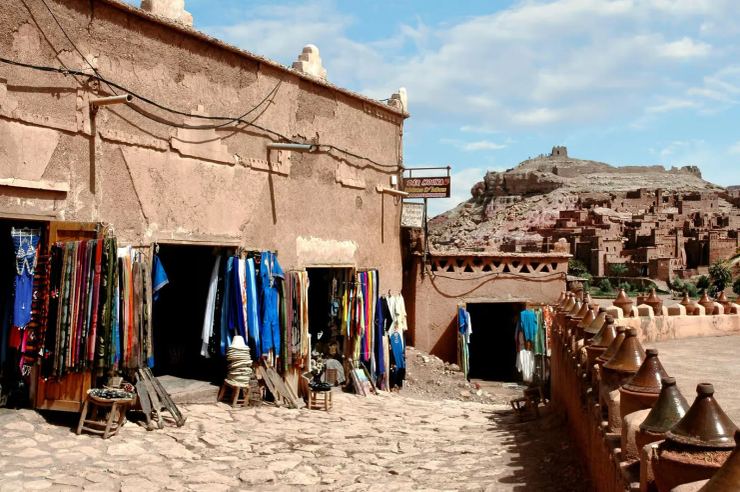
The Moroccan government confirmed that filming took place in Ouarzazate province (home to Aït Benhaddou), Essaouira, Marrakech, and Dakhla[^4]. While Greek islands provided Homer’s original landscapes, Morocco delivered the raw, sun‑baked scale that a story like The Odyssey demands. And unlike a soundstage, these locations are open to you — no studio gate required.
Aït Benhaddou: The Face of Troy
Why Aït Benhaddou Became Homer's Troy
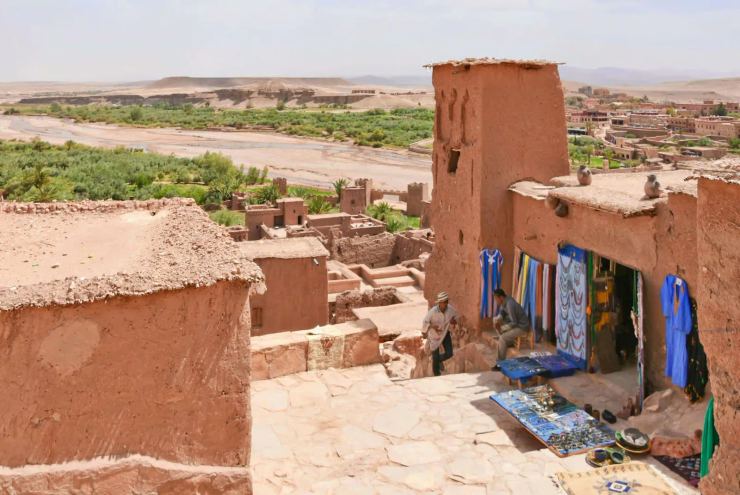
The Ksar of Aït Benhaddou is a fortified village (ksar) that has guarded the old caravan route between the Sahara and Marrakech since the 11th century. UNESCO inscribed it in 1987[^5], recognizing its outstanding earthen architecture. For Nolan, it was the perfect stand‑in for Troy: a walled citadel rising from a rocky hill, surrounded by a riverbed that could be transformed into the plains where armies clash. The Associated Press confirmed that “Troy was constructed in Morocco”[^6], and the Moroccan government explicitly named Aït Benhaddou as the site of the ancient city[^4]. While the production built additional set pieces beside the ksar — likely temporary structures that have since been removed — the skyline you see on screen is the real Aït Benhaddou, unchanged for centuries.
This isn’t the ksar’s first Hollywood role. Long‑time fans of Game of Thrones will recognise it as Yunkai, the Yellow City, and it has appeared in Gladiator, Lawrence of Arabia, and The Mummy. Our own guide to Aït Benhaddou's role in Game of Thrones (internal link pending — see our architecture hub) details how the ksar’s labyrinthine alleys and towering kasbahs have made it a favourite of location scouts for decades. What sets The Odyssey apart is the sheer scale: Nolan’s IMAX cameras captured the ksar in a way that makes you feel the weight of every stone.
How to Visit Aït Benhaddou and Walk the Same Ramparts
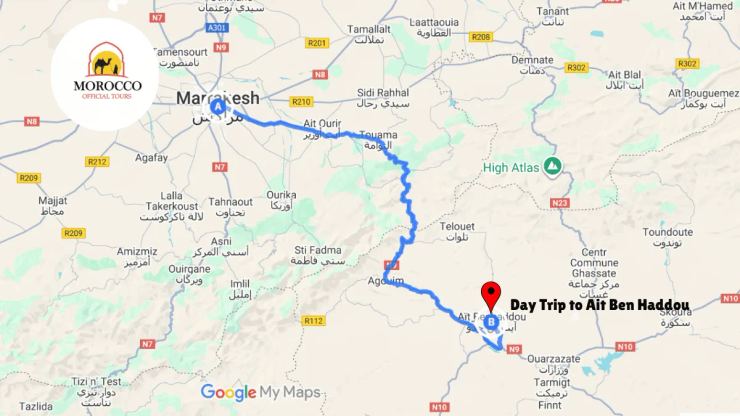
The ksar lies about 190 km southeast of Marrakech, a drive of roughly 3.5 hours through the High Atlas via the Tizi n’Tichka pass. Once you arrive, you cross a small river (dry most of the year) and enter through a monumental gate. You can wander the narrow streets, climb to the agadir (granary) at the top, and look out over the valley exactly as the film’s characters did. The interior is still partly inhabited — a handful of families live within the walls, and you’ll find small shops selling carpets and fossils.
Cost: Entry is around 30 MAD (about €3), payable at the gate. Allow: 2–3 hours to explore the ksar and the surrounding village. Best time: Early morning or late afternoon, when the light turns the walls gold and the day‑trip crowds from Marrakech are thinner.
For a seamless experience, our Ouarzazate & Aït Benhaddou Full Day Excursion includes private transport, a guided tour of the ksar, and a stop at the Atlas Film Studios in Ouarzazate — where you can see sets from other epics. It’s a 12‑hour day, priced from €150 per private group.
Essaouira: Where the Trojan Horse Met the Sea
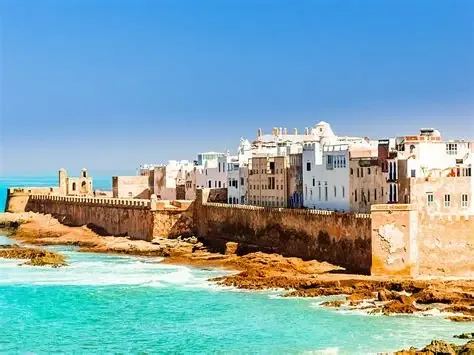
Poseidon's Wrath on the Atlantic Coast
While Aït Benhaddou gave The Odyssey its ancient walls, Essaouira supplied the untamed sea. The Moroccan government confirmed that the city’s shores were used to depict the sea conditions associated with Poseidon[^4]. Anyone who has stood on Essaouira’s ramparts in spring, watching waves explode against the Skala, knows that the Atlantic here doesn’t need special effects. The constant wind — the alizé — whips the ocean into a fury that perfectly mirrors the god’s temper.
Reports also suggest that the beach scenes involving the Trojan Horse were shot at Essaouira, though this has not been officially confirmed. Lonely Planet and several travel outlets have pointed to the long, windswept sands south of the medina as the likely spot. Whether or not the horse itself stood here, the coastline’s dramatic dunes and crashing surf make it easy to imagine Odysseus’s fleet struggling against the elements.
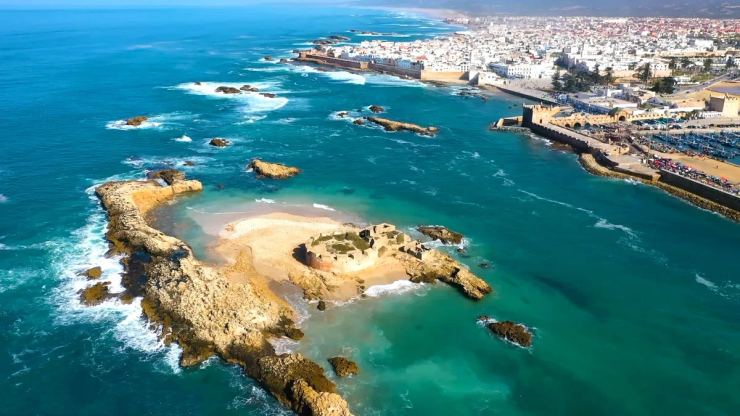
Exploring the Medina and Ramparts of Essaouira
The Medina of Essaouira, a UNESCO World Heritage site since 2001[^7], is a masterpiece of 18th‑century military architecture. Its ramparts, designed by a French engineer, were built to defend the port from sea attacks — and they look every bit the part of a mythic kingdom’s coastal fortress. Walk the Skala de la Ville at sunset, when the cannons cast long shadows and the call to prayer drifts from the minarets, and you’ll feel the same cinematic atmosphere that drew Nolan here.
Cost: Access to the ramparts costs about 60 MAD (€6). The medina itself is free to wander. Allow: A full day to soak up the port, souks, and seafood. Best time: Spring and autumn for the most dramatic waves; summer for beach weather.
Our Essaouira Day Trip takes you from Marrakech to the coast in about 2.5 hours, giving you a full 10‑hour day to explore the medina, ramparts, and beach. Priced from €120 per private group, it includes transport and a local guide who can show you the exact viewpoints that appear in the film.
Behind the Scenes: Marrakech, Dakhla & the Mythical Island of Ogygia
Morocco Map: Aït Benhaddou, Essaouira and Marrakech
Located in very different parts of Morocco, Marrakech, Essaouira and Aït Benhaddou offer three distinct perspectives on the country’s landscapes, history and culture. A map connecting these destinations highlights Morocco’s remarkable diversity—from the imperial city and the Atlas Mountains to the Atlantic coast and the dramatic earthen architecture of the south.
Marrakech: The Heart of the Journey
At the centre of this itinerary is Marrakech, one of Morocco’s most iconic cities. Founded in the 11th century, the city became an important political, economic and cultural centre. Its historic medina, a UNESCO World Heritage Site, is home to landmarks such as the Koutoubia Mosque, ancient ramparts, palaces, gardens and the famous Jemaa el-Fna square.
Marrakech is also an ideal base for exploring the High Atlas and travelling further south towards Aït Benhaddou.
Aït Benhaddou: A Gateway to Southern Morocco
Further southeast lies Aït Benhaddou, one of Morocco’s most spectacular historic sites. The fortified ksar is made up of traditional earthen buildings clustered along the former caravan route between the Sahara and Marrakech.
Listed as a UNESCO World Heritage Site since 1987, Aït Benhaddou is renowned for its distinctive architecture and its setting among the landscapes of southern Morocco. The journey from Marrakech takes travellers across the High Atlas before descending into the valleys and more arid landscapes beyond the mountains.
The site is particularly striking at sunrise and sunset, when the earthen buildings take on warm golden and ochre tones.
Essaouira: Morocco on the Atlantic
To the west of Marrakech, on Morocco’s Atlantic coast, Essaouira offers a completely different atmosphere. Formerly known as Mogador, the city is famous for its fortified medina, sea walls, harbour and whitewashed buildings.
Its medina is also a UNESCO World Heritage Site and represents an outstanding example of an 18th-century fortified port town, combining European architectural influences with North African traditions.
The contrast with Aït Benhaddou is striking: instead of desert landscapes and earthen fortifications, Essaouira is defined by the ocean, strong Atlantic winds, fishing boats and historic stone ramparts.
Three Destinations, Three Faces of Morocco
On a map of Morocco, these three destinations create a compelling travel triangle:
Marrakech – the historic imperial city and gateway to the High Atlas;
Aït Benhaddou – a remarkable example of southern Moroccan architecture and heritage;
Essaouira – an atmospheric Atlantic port city known for its medina and maritime heritage.
Together, they illustrate the extraordinary geographical and cultural diversity of Morocco. From Marrakech’s bustling medina to the mountain landscapes surrounding Aït Benhaddou and the windswept Atlantic coast of Essaouira, each destination offers a distinctly different experience.
A Map That Puts the Journey into Perspective
A map pinpointing Marrakech, Aït Benhaddou and Essaouira helps travellers understand the geography of the route. Marrakech lies inland at the foot of the Atlas Mountains, Essaouira is located on the Atlantic coast to the west, while Aït Benhaddou lies farther southeast, beyond the High Atlas.
Suggested map caption: Map of Morocco showing the locations of Marrakech, Essaouira and Aït Benhaddou, three iconic destinations spanning the country’s historic cities, Atlantic coast and southern landscapes.
Marrakech: Palace Interiors Fit for a King
Marrakech was confirmed as a filming location[^4], though the exact role remains unverified. Speculation points to a palace interior — perhaps a riad or one of the city’s historic palaces — standing in for the opulent halls of Ithaca or the court of King Alcinous. Marrakech’s medina is filled with hidden courtyards and intricately carved stucco that could easily double for Homeric luxury. While we wait for official details, you can explore the same architectural heritage in the Bahia Palace or the Medersa Ben Youssef, both open to visitors.
Dakhla's White Dune: Calypso's Island?
Dakhla, a remote peninsula in southern Morocco, was also on Nolan’s list[^4]. The rumour mill has linked its White Dune — a vast, otherworldly sand formation — to the island of Ogygia, where Calypso held Odysseus captive. The dune’s isolation and surreal beauty certainly fit the myth, but no official source has confirmed this. What we do know is that Dakhla’s landscapes are unlike anything else in Morocco: a lagoon on one side, the open Atlantic on the other, and dunes that shift with the wind. It’s a long journey from Marrakech (a 2‑hour flight or a 20‑hour drive), but for dedicated film pilgrims, it’s a true adventure.
Plan Your Odyssey Through Morocco's Film History
Morocco has long been one of cinema’s most captivating locations. Its ancient medinas, fortified kasbahs, Atlantic coastlines, mountains and desert landscapes have provided the backdrop for stories set everywhere from ancient Rome and biblical Jerusalem to fictional kingdoms and distant worlds.
For film lovers, travelling through Morocco is therefore more than a sightseeing adventure—it can be a journey through more than a century of cinematic history.
Marrakech: Begin Where Cinema Meets Culture
Start your cinematic journey in Marrakech, one of Morocco’s most atmospheric cities. Its ochre walls, labyrinthine medina and lively squares have attracted filmmakers looking for an authentic North African setting.
The city is also home to the Marrakech International Film Festival, established in 2001. The festival has become an important international meeting place for filmmakers and actors, while also highlighting emerging Moroccan talent through programmes such as its student short-film competition.
Spend time exploring the medina before setting off towards the High Atlas. From here, the landscape changes dramatically as the road climbs into the mountains and heads towards one of Morocco’s most famous cinematic destinations.
Aït Benhaddou: Step Onto a Legendary Film Set
Few places embody Morocco’s cinematic heritage more vividly than Aït Benhaddou.
This spectacular fortified ksar, built from earthen architecture, has appeared in numerous major productions. Its distinctive towers, walls and narrow passageways have allowed filmmakers to transform the location into ancient cities and imaginary worlds.
The surrounding Ouarzazate region first attracted major international productions in the 1960s, including David Lean’s Lawrence of Arabia. Later productions included The Man Who Would Be King, The Last Temptation of Christ, Gladiator, Kingdom of Heaven, Babel and Game of Thrones.
Today, visitors can walk through the historic ksar and see the landscape that has appeared on screen countless times. The experience is particularly magical when the late-afternoon light turns the earthen buildings deep shades of gold and red.
Ouarzazate: Welcome to “Ouallywood”
A short distance from Aït Benhaddou lies Ouarzazate, often nicknamed “Ouallywood” because of its long association with international filmmaking.
The city’s Atlas Studios, founded in 1983, became one of the key pillars of Morocco’s film industry. The studio complex contains large outdoor and indoor sets and has hosted productions including Gladiator, Kundun, Kingdom of Heaven, Babel and Ben-Hur.
A studio visit offers a fascinating glimpse behind the scenes. Ancient Egyptian temples, palaces, kasbahs and other elaborate sets reveal how a single location can be transformed to represent completely different periods and places.
The surrounding landscape is just as important as the studios themselves. With dramatic mountains, desert scenery, palm-filled valleys and traditional earthen architecture, Ouarzazate gives filmmakers an extraordinary variety of locations within a relatively compact area.
Essaouira: Cinema on the Atlantic
Continue west towards Essaouira, where Morocco’s cinematic landscape meets the Atlantic Ocean.
The city’s fortified walls, harbour and whitewashed medina have attracted filmmakers for decades. One of its most famous cinematic connections is Orson Welles’ Othello, for which Essaouira provided locations in the early 1950s.
More recently, the city became recognisable to television audiences through Game of Thrones, which used Moroccan coastal locations to portray parts of its fictional world.
Beyond its film connections, Essaouira is worth visiting for its own character: sea air, fishing boats, historic ramparts, winding streets and a relaxed Atlantic atmosphere make it a striking contrast to the desert landscapes around Ouarzazate.
From Gladiator to Game of Thrones
Morocco’s appeal to filmmakers comes from its extraordinary versatility. Within a relatively short journey, productions can find snow-capped mountains, ancient-looking villages, desert landscapes, Roman-style scenery, fortified cities and Atlantic beaches.
That versatility explains why Morocco has doubled for so many different places on screen. Gladiator used Moroccan landscapes to recreate the ancient world, while The Last Temptation of Christ drew on the country’s biblical-looking landscapes. Inception, Babel and Mission Cleopatra are among the many other international productions filmed in Morocco.
A New Chapter: The Odyssey
Morocco’s film story is far from over.
In 2026, Ouarzazate once again found itself at the centre of international filmmaking when Christopher Nolan’s The Odyssey came to the region. Morocco’s government reported that Aït Benhaddou was selected to portray the mythical city of Troy, adding another major production to the location’s remarkable cinematic history.
The choice is fitting. For decades, filmmakers have been drawn to the same qualities: dramatic natural light, monumental landscapes and historic architecture capable of transporting audiences to another era.
Plan Your Own Cinematic Road Trip
For travellers fascinated by film, a route linking Marrakech, Aït Benhaddou, Ouarzazate and Essaouira offers a memorable way to experience Morocco.
Begin in Marrakech, where contemporary Moroccan culture meets an international film scene. Cross the High Atlas towards Aït Benhaddou and Ouarzazate to explore the landscapes behind some of cinema’s greatest historical epics. Then head west to Essaouira for a very different cinematic atmosphere beside the Atlantic.
Along the way, keep an eye out for familiar landscapes. A dusty road may suddenly look like a scene from Gladiator. A fortified wall may evoke Game of Thrones. A desert valley may transport you to an entirely different century.
That is the magic of Morocco on film: the country does not simply provide a backdrop—it becomes part of the story.
Best Time to Visit Aït Benhaddou and Essaouira
Both destinations are accessible year‑round, but the ideal window is October to April, when daytime temperatures are comfortable (20–28°C) and the summer crowds have thinned. Essaouira’s wind is strongest in spring and autumn — perfect for those Poseidon‑worthy waves. Aït Benhaddou can be scorching in July and August (often above 40°C), so plan your climb to the top for early morning if you visit in summer.
Getting There and Around
Most travellers base themselves in Marrakech and take day trips to Aït Benhaddou or Essaouira. The drive to Aït Benhaddou crosses the High Atlas; the road is well‑paved but winding, so allow extra time. Essaouira is a straightforward 2.5‑hour drive west. For Dakhla, you’ll need a domestic flight from Casablanca or Marrakech. If you’re combining both film locations, a 3‑day itinerary works well: day 1 to Aït Benhaddou (overnight in Ouarzazate), day 2 return to Marrakech, day 3 to Essaouira. Our private excursions handle all the logistics so you can focus on the landscapes.
Local tip from Rachide
Travel it with us
- Ouarzazate & Aït Benhaddou Full Day Excursion — 12 hours · from €150/private group
- Essaouira Day Trip — Full Day (10 hours) · from €120/private group
You might also like
- Architecture & heritage hub — explore more UNESCO sites and film locations across Morocco.
FAQ
Where in Greece is The Odyssey being filmed?
Greece was indeed one of the six filming countries, with scenes shot on several islands and historical sites to capture Homer's original landscapes. However, the massive Troy exteriors and key iconic moments (Poseidon’s seas, Trojan Horse beach) were filmed in Morocco, specifically Aït Benhaddou and Essaouira. This guide focuses on Morocco because these locations are open to visitors year‑round and deliver the most striking Odyssey backdrops.
Are the locations in The Odyssey real?
Yes — many are. The Ksar of Aït Benhaddou is a genuine 11th‑century fortified village and UNESCO World Heritage site, not a studio backlot. Similarly, Essaouira's Medina and ramparts are authentic 18th‑century fortifications, also UNESCO listed. Some sets, like the Trojan Horse and certain palace interiors, were built temporarily for filming, but Nolan's team integrated real Moroccan heritage extensively.
Is The Odyssey hit or flop?
Definitely a hit. It earned a record worldwide opening weekend of $264 million[^1] and became Nolan's highest‑grossing film. The movie's success has spiked interest in its filming locations, with searches for “where was the odyssey filmed” surging dramatically year‑on‑year.
What is the controversy over the movie The Odyssey?
Most headlines concern non‑Moroccan locations. Some reports claim that parts were filmed on occupied land in other countries, but these are external to the Moroccan shoot. Within Morocco, filming was widely celebrated and supported by local authorities — no controversy here. Focus remains on the stunning visuals and cultural collaboration.
What did Elon Musk say about The Odyssey?
Elon Musk has not made any public statement about The Odyssey that has been verified by major news outlets. Any social media posts attributed to him should be treated as unconfirmed.
Is there LGBTQ representation in The Odyssey?
The film’s narrative, drawn from Homer’s epic, does not explicitly feature LGBTQ storylines, and no official commentary from the filmmakers has addressed this. Discussions online remain speculative.
Sources
- AP News: Christopher Nolan's The Odyssey release date and details
- Maroc.ma: Official Moroccan government portal on The Odyssey filming
- AP News: The Odyssey by numbers — six countries
- AP News: Troy constructed in Morocco
- Reuters: First feature film shot entirely with IMAX cameras
- UNESCO: Ksar of Aït‑Ben‑Haddou
- UNESCO: Medina of Essaouira
[^1]: Maroc.ma, “Ouarzazate, terre d’accueil d’une nouvelle Odyssey du cinéma mondial,” 2026.
[^2]: Reuters, “Matt Damon calls The Odyssey the most challenging film of his career,” 2026.
[^3]: AP News, “The Odyssey by the numbers,” 2026.
[^4]: Maroc.ma, same as above.
[^5]: UNESCO, “Ksar of Aït‑Ben‑Haddou,” World Heritage List.
[^6]: AP News, “Troy constructed in Morocco,” 2026.
[^7]: UNESCO, “Medina of Essaouira (formerly Mogador),” World Heritage List.